

If you’ve ever called a tree service in Adelaide and been unsure whether you need pruning, lopping, or trimming, you’re not alone. These three terms are used interchangeably by homeowners all the time — but for arborists, they describe very different processes with very different outcomes for your trees.
Getting the terminology right isn’t just about sounding knowledgeable. It’s about making sure the right technique is applied at the right time, to the right tree. Using the wrong approach can mean the difference between a thriving, structurally sound tree and one that becomes a liability — or doesn’t survive at all.
Here’s a clear breakdown of what each service actually involves, when each is appropriate, and why working with a qualified arborist in Adelaide ensures your trees get the care they actually need.
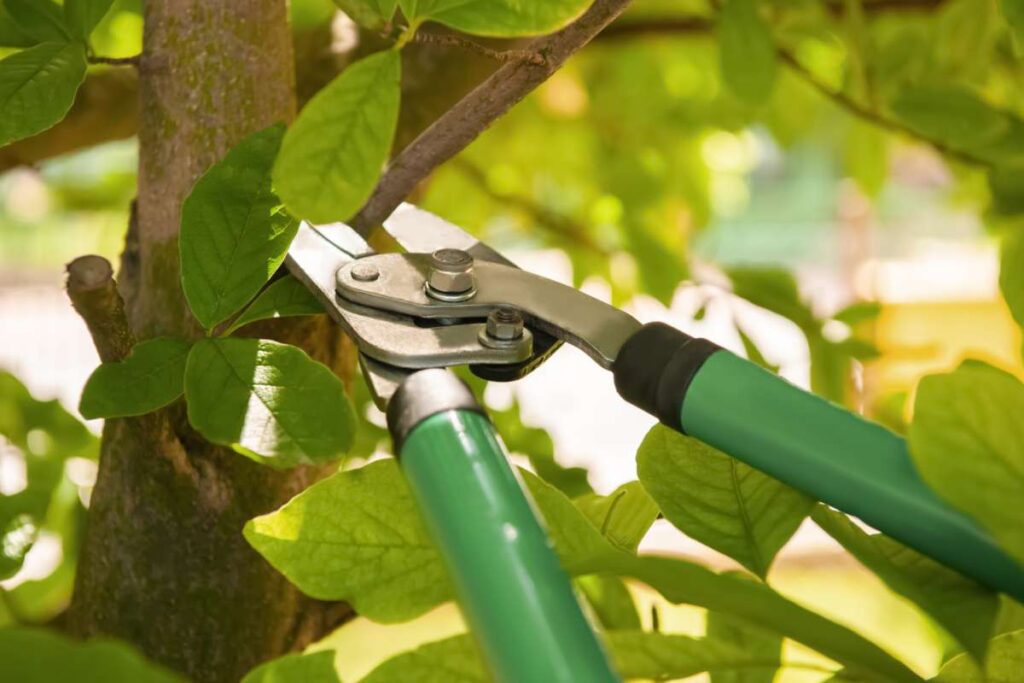
What Is Tree Pruning?
Tree pruning is the most precise and arboriculturally sound of the three practices. It involves the selective removal of specific branches — targeting those that are dead, diseased, damaged, crossing, or structurally weak. Pruning is always done with the long-term health, structure, and safety of the tree in mind.
A properly pruned tree is one where every cut is intentional. Arborists trained in pruning understand how trees respond to wounding, how to avoid creating entry points for disease, and how to preserve the natural growth form while managing risk.
Common Reasons for Pruning:
- Removing dead, dying, or diseased branches (known as crown cleaning)
- Improving the structural integrity of young trees (formative pruning)
- Lifting the canopy to increase light and clearance underneath (crown lifting)
- Reducing the density of foliage to allow light and air through (crown thinning)
- Reducing the overall height or spread carefully (crown reduction)
- Managing hazardous branches near power lines, roofs, or pedestrian areas
Pruning is governed by Australian Standards (AS 4373-2007 — Pruning of Amenity Trees), which outline best practices for cut placement, wound size, and the amount of foliage that should be removed in a single session. A qualified arborist in Adelaide will always work within these guidelines.
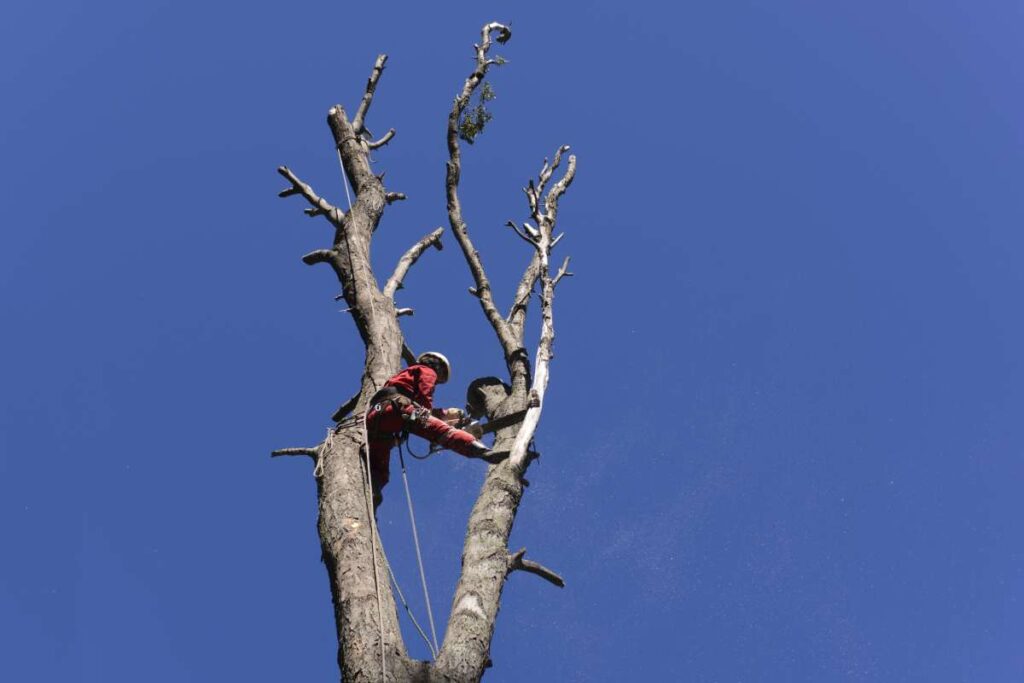
What Is Tree Lopping?
Tree lopping refers to the indiscriminate cutting back of large branches, often to stubs, without regard to the tree’s natural growth structure or wound response. It’s sometimes called “hat-racking” or “topping” when applied to the main trunk or primary branches.
Unlike pruning, lopping doesn’t follow the science of arboriculture. Cuts are typically made mid-branch, leaving large wounds that the tree struggles to close. This exposes the tree’s heartwood to rot, fungal infection, and pest entry. The tree’s stress response often results in rapid regrowth of weak, poorly attached “epicormic shoots” — branches that look bushy but are structurally hazardous.
It’s worth noting that in the arboricultural industry, lopping is generally considered a harmful practice when applied incorrectly. Most certified arborists in Adelaide will not recommend it as a routine maintenance approach. However, the term is sometimes used colloquially to describe any large-scale branch removal — which is why it’s important to discuss the specifics with your arborist before work begins.
When Lopping Might Be Considered:
- Emergency situations where a severely damaged tree needs immediate stabilisation
- Preparatory work before a full tree removal
- Certain heritage or council-approved situations with specific requirements
Even in these cases, the work should only be carried out by a qualified professional who understands the risks and can advise on follow-up care or removal if needed.
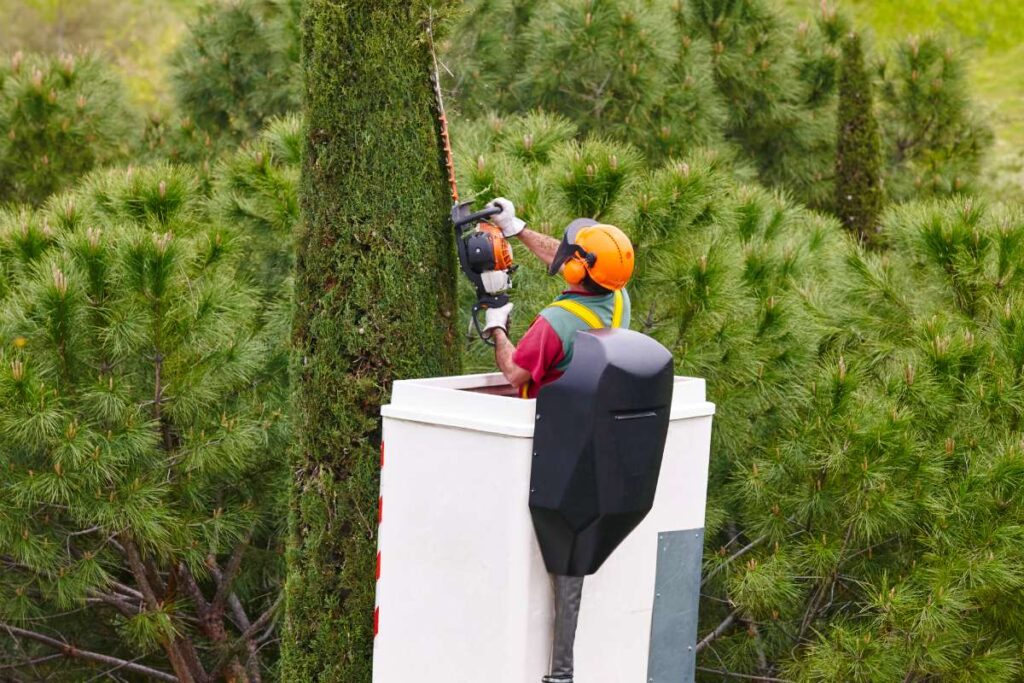
What Is Tree Trimming?
Trimming generally refers to lighter maintenance work — tidying up the outer edges of a tree’s canopy, removing minor overgrowth, or shaping hedges and ornamental trees for aesthetic purposes. It’s less about tree health and more about managing appearance, clearance, and neatness.
In Adelaide gardens, trimming is commonly used for ornamental natives, hedgerows, small feature trees, and shrubs. It’s typically done more frequently than pruning and involves smaller-diameter branches and foliage.
Typical Trimming Applications:
- Shaping hedges and topiaries
- Clearing minor overhangs from gutters, fences, or pathways
- Tidying the edges of a tree’s canopy for a clean, manicured appearance
- Removing small water shoots or suckers from the base of trees
- Pre-season maintenance before summer or winter growth periods
Trimming, when done regularly and correctly, can reduce the need for more significant pruning down the track. However, even trimming can cause damage if done incorrectly — for instance, cutting into live growth at the wrong time of year can stress a tree and leave it vulnerable to disease.
Side-by-Side Comparison: Pruning vs Lopping vs Trimming
Here’s a quick overview to help clarify the distinctions:
Pruning: Selective, intentional cuts | Purpose: Tree health, safety, structure | Performed by: Arborist (AS 4373) | Frequency: Annually or as needed
Lopping: Indiscriminate large cuts to stubs | Purpose: Size reduction (not health-focused) | Performed by: Qualified professional only | Frequency: Emergency/removal prep only
Trimming: Light shaping and edge tidying | Purpose: Aesthetics and clearance | Performed by: Arborist or experienced gardener | Frequency: Seasonally or as required
Why the Difference Matters for Your Trees — and Your Property
Applying the wrong technique to a tree can have serious and lasting consequences. Here’s why choosing correctly matters:
1. Tree Health and Longevity
Pruning supports a tree’s long-term health by removing problematic material while preserving as much of the canopy as possible. Lopping, by contrast, removes a large proportion of the leaf area, essentially starving the tree of its ability to photosynthesise. This triggers a stress response that, over time, can lead to decay, structural failure, and early death of the tree.
2. Structural Safety
Incorrect pruning or lopping creates large, undefended wounds and encourages the growth of weakly attached epicormic branches. These branches are more likely to fail during Adelaide’s summer storms or high-wind events — posing a risk to people, vehicles, fences, and structures on your property.
3. Legal and Council Obligations
In Adelaide, many significant trees — particularly those in character zones, heritage areas, and council-managed land — are protected under the Planning, Development and Infrastructure Act 2016 and local council bylaws. Lopping a protected tree without council approval can result in significant fines. If you’re unsure whether your tree is protected, consult a qualified arborist before doing any work.
4. Property Value
Well-maintained, healthy trees add significant value to residential and commercial properties in Adelaide. Incorrectly lopped trees that are visually disfigured, structurally compromised, or in decline can actually detract from a property’s appearance and sale value. In contrast, trees that have been properly pruned and maintained over time become valuable assets.
When to Call an Arborist in Adelaide
A qualified arborist — particularly one holding a Certificate III or higher in Arboriculture — is the right person to assess and carry out any tree work beyond basic garden tidying. Here are the situations where professional advice is essential:
- Any work on large, mature, or native trees
- Trees that are near powerlines, structures, or boundaries
- Trees showing signs of disease, decay, or dieback
- Trees in protected or heritage-listed areas
- Situations where council approval may be required
- After storm damage — especially where structural failure is a concern
- If you’re unsure whether a tree needs pruning, trimming, or removal entirely
Adelaide’s urban tree canopy faces unique pressures — from dry summers and clay soils to the prevalence of native species like eucalypts and acacias that respond very differently to cutting than exotic species. An experienced local arborist understands these nuances and can tailor their approach accordingly.
Questions to Ask Before Hiring a Tree Service
Not all tree services are equal. Before hiring anyone to work on your trees in Adelaide, it’s worth asking the following:
- Are you a certified arborist? (Look for AQF Level III or higher)
- Do you carry public liability insurance?
- Will you work to Australian Standard AS 4373-2007?
- Can you advise on whether council approval is needed?
- Will you provide a written quote with a clear scope of works?
Be cautious of any operator who offers tree work at unusually low prices without providing evidence of qualifications and insurance. Cheaper is rarely better when it comes to work that affects the safety of your property and the health of trees that may be decades old.
Final Thoughts: Getting Tree Care Right in Adelaide
Tree pruning, lopping, and trimming each have their place — but they are not interchangeable. Pruning is the gold standard of tree care, carried out to a defined standard by qualified arborists. Trimming is appropriate for lighter, more cosmetic maintenance. Lopping, when used incorrectly and by unqualified operators, does more harm than good.
The trees on your Adelaide property are long-term investments. Whether you have a single specimen gum in the backyard or a row of established hedges along your boundary, the care you give them today determines how they perform for decades to come.
If you’re unsure what your trees need, reach out to the team at Arborist Adelaide for an assessment. We’ll give you an honest, expert recommendation — and make sure the right approach is used from the start.
— Arborist Adelaide | Expert Tree Care Across the Adelaide Region